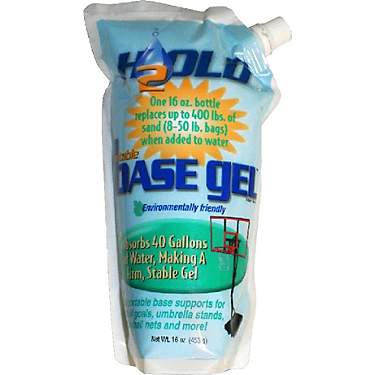
You can fill the base with either sand or water, keeping the following in mind:
Sand: Much denser than water (making it about 45% heavier), which provides more stability. This is highly recommended if you do not plan to move the hoop often.
Water: Easier to fill and empty, but it poses a risk as it can freeze and crack the base in cold climates.
Before installing an in-ground hoop, you should take these steps:
Check Local Rules: In some areas, you may need to check with your local government or homeowner's association (HOA).
Call 811:You must call 811 to have any underground utility lines marked before you dig to ensure a safe installation.
The space required depends on your setup:
Half-Court Setup: A flat, paved area that is at least 30 feet long and 25 feet wide is ideal.
Casual Play: A standard two-car driveway provides plenty of space for shooting practice and fun family games like H-O-R-S-E.
The first step in choosing a goal is deciding which type best fits your home and playing style. There are three main options, each with unique benefits for different situations.
Portable Basketball Hoops
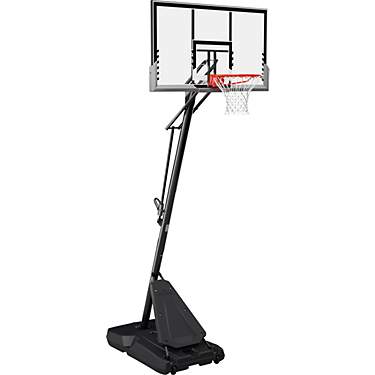
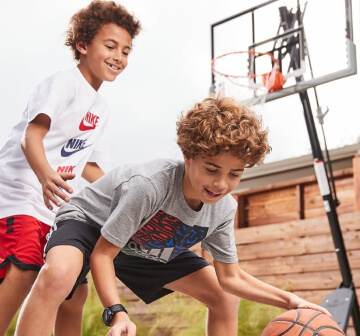
Portable hoops are the most popular choice for families and casual play. They have a large base that you fill with water or sand for stability. Wheels on the base allow you to move the goal around your driveway or into the garage for storage. This makes them incredibly versatile.
Their main advantage is flexibility. You can easily adjust the hoop's position to make space for cars or move it to a different area for a neighborhood game. Most portable hoops also feature easy-to-use height adjustment, which is perfect for families with growing kids.
In-Ground Basketball Hoops
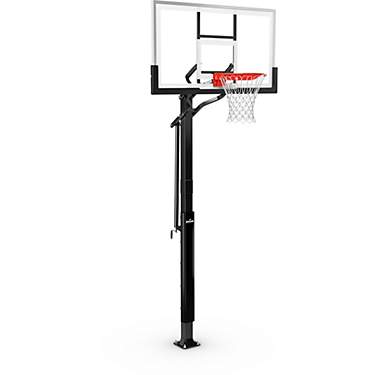
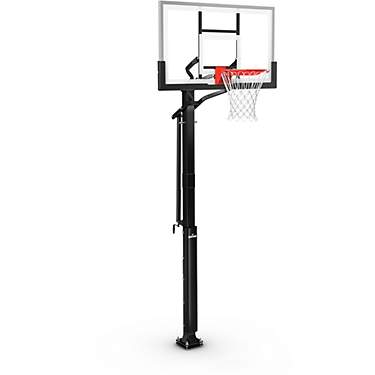
For the most stable and professional-feeling experience, an in-ground basketball hoop is the top choice. These hoops are permanently installed by cementing a steel pole directly into the ground. A good in-ground system a good in-ground basketball goal will greatly reduce vibrations and offer consistent rebounds, similar to what you’d find on an indoor court.
While they require a permanent spot and more installation work, their durability is unmatched. They can handle more aggressive play and are built to withstand the weather for many years. This is a great investment for families with dedicated players who want to practice in a serious setting.
Mounted Basketball Hoops
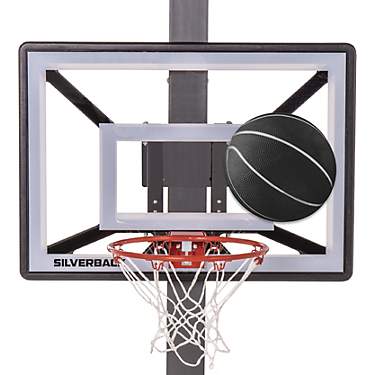
A mounted basketball hoop is a great space-saving solution. This type of system includes just the backboard, rim, and mounting hardware. It can be installed on the side of a garage, a barn, or another sturdy wall. If you have the perfect spot, a mounted goal offers excellent stability without taking up any ground space.
They are a more permanent option, so it’s important to make sure your chosen location is flat and has enough room for play. They can also be a good option for indoor game rooms or gyms.
Material
Rebound Quality
Durability
Best For
Tempered Glass
Excellent (gym-quality bounce)
Highly durable but can shatter under extreme impact.
Serious players and competitive athletes.
Acrylic
Very good with a slightly softer feel.
Shatter-resistant but may scratch or yellow over time.
 Track Order
 myAcademy® Rewards Credit Card
 Need Help?