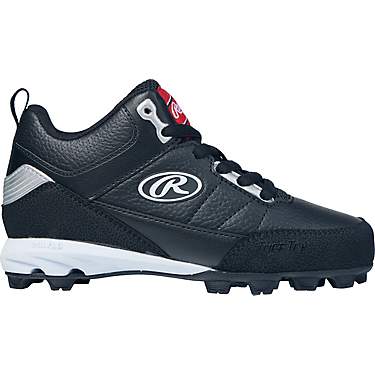
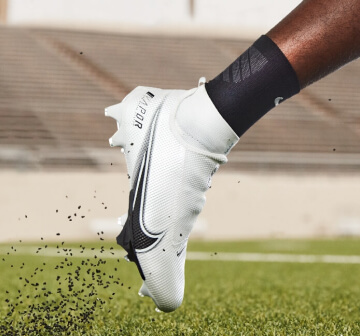
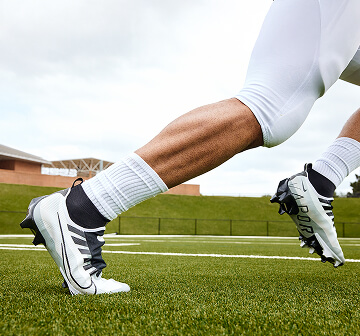
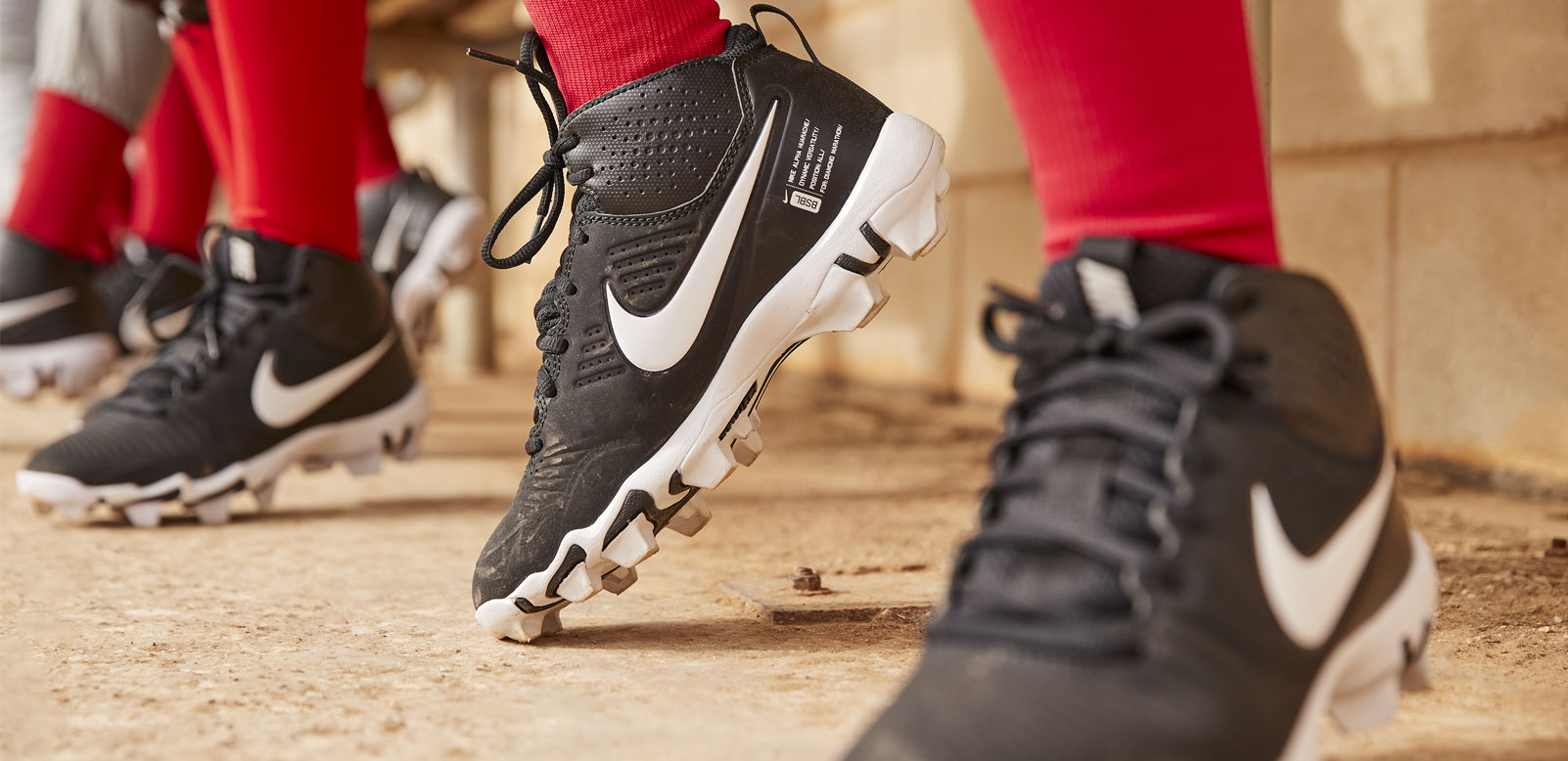
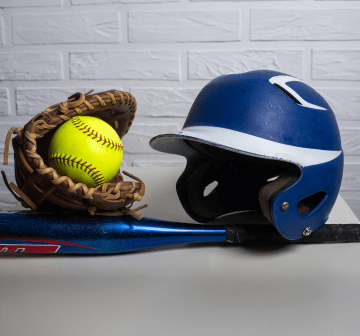
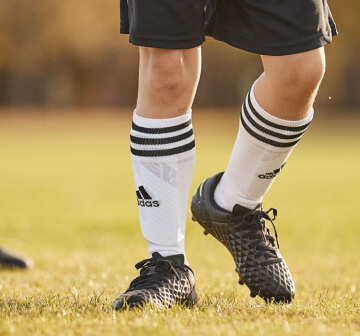
We recommend buying the type of cleat designed for your child’s specific sport. However, if you need to use the same cleat for multiple sports, consider soccer cleats. Baseball and football cleats have toe spikes (or in some cases, metal cleats) that are not allowed in soccer. For a more detailed explanation of the types of cleats, read our article about the differences in cleats.
Yes, many brands offer cleats designed for wider feet, ensuring comfort and a proper fit. Look for cleats labeled as "wide" or check the brand’s size guide for width options.
To clean cleats, remove excess dirt with a brush, wipe with a damp cloth, and let them air dry. Avoid using a washing machine or direct heat, as these can damage the materials.
It depends on the player’s preference and skill level. Cleats with laces provide a more secure fit and do not affect how well you strike a ball. Laceless cleats are more for convenience and are generally used for lower skill levels.
Cleats should fit snugly around the foot without the foot being able to slide back and forth. Check for features like ankle collars, sturdy outsoles, and padded insoles. These elements help support young athletes during intense activity and reduce the risk of injury.
 Track Order
 myAcademy® Rewards Credit Card
 Need Help?